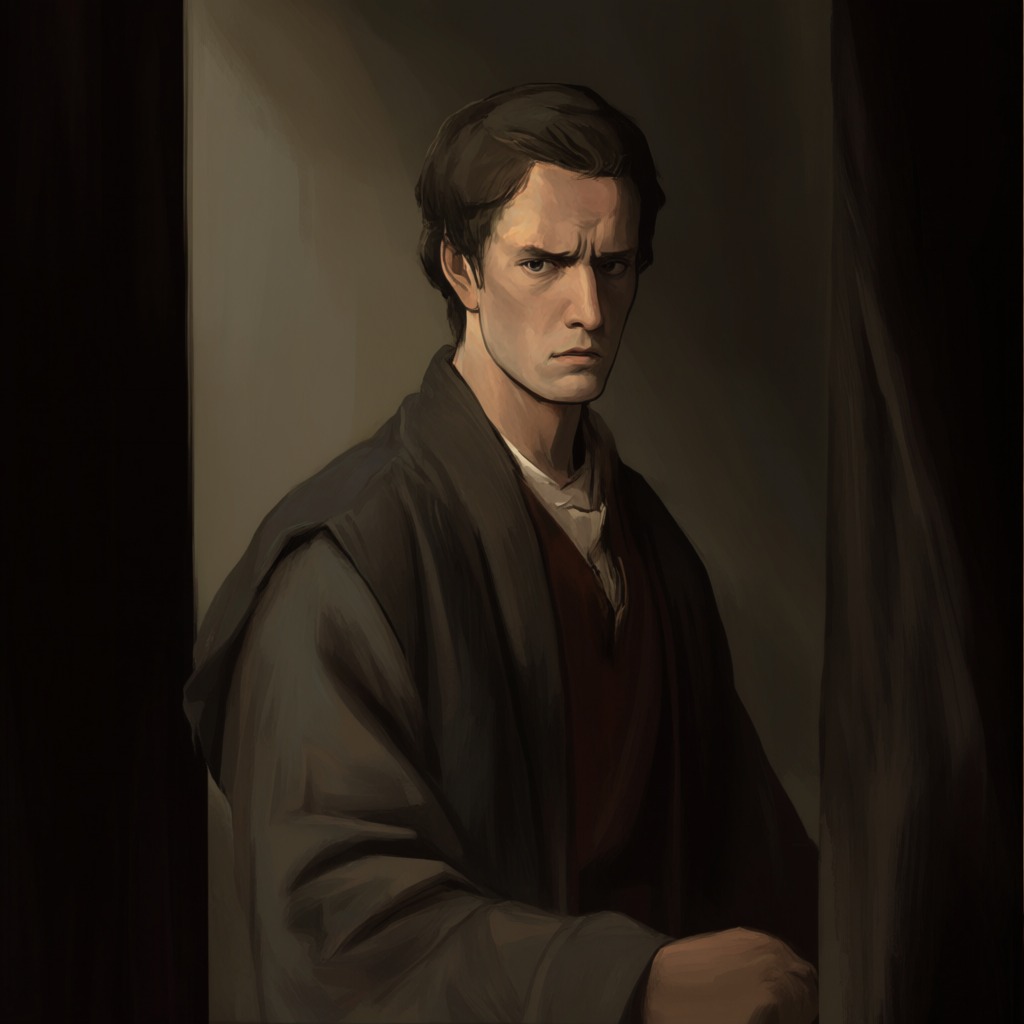
Richard Horpe
Ser Richard Horpe is a lean, scarred knight who serves as one of King Stannis Baratheon's most trusted captains. His quilted doublet bears three death's-head moths on a field of ash and bone, a sigil that matches his grim reputation. He is a queen's man, a fervent follower of the Lord of Light, and he aspires to be named Lord of Winterfell, a prize Stannis dangles before his knights.
Identity and Ambition
Horpe is introduced as a man of few words and lethal intent. When Jon Snow warns Stannis against a rash attack on the Dreadfort, Horpe counters with cold logic: "Risk is part of war. Every battle is a gamble, Snow. The man who does nothing also takes a risk." His face, ravaged by some past wound, gives him a permanently menacing aspect. Stannis later reveals that Horpe once dreamed of a white cloak, but Cersei Lannister spoke against him and Robert passed him over. "Ser Richard is too fond of killing," the king observes, weighing Horpe against the more genial Justin Massey as a potential Lord of Winterfell. Horpe himself makes no secret of his desires; he would take Val to wife if Stannis commanded it, but it is battle he truly lusts for.
Role in the March on Winterfell
During the grueling march from Deepwood Motte to Winterfell, Horpe emerges as Stannis's second-in-command. When the king's host is snowbound and starving, it is Horpe who delivers the daily "cold count" of dead men and horses. He urges the king to press on, arguing that the weakest men are beyond saving and that those still strong enough must reach Winterfell or die as well. When Lord Peasebury turns against the northmen, accusing them of luring the army into a trap, Horpe does not intervene in the quarrel but later silences Justin Massey's defeatism with a hand on his sword hilt, reminding him that they have but one god now. His loyalty to Stannis is absolute, and he is willing to enforce discipline with steel.
Relationship with Stannis and Other Captains
Horpe stands apart from the more flamboyant queen's men like Godry Farring and Clayton Suggs. He is a soldier, not a zealot, and his counsel is valued by Stannis for its bluntness. When the king decides to march despite the storm, Horpe supports the decision without the theatrical prayers of the other queen's men. He is also the one who discovers the abandoned crofter's village between two lakes, where the army halts to fish through the ice. His relationship with Justin Massey is strained; Massey openly questions the march, and Horpe responds with cold contempt, accusing him of preaching defeat at every step. "It makes me wonder whose side you are on," Horpe says, a threat that silences Massey.
Thematic Significance
Horpe embodies the harsh, unyielding nature of Stannis's cause. He is a killer who has found purpose in the king's service, a man who has traded his dream of a white cloak for the reality of a bloody war. His death's-head moths are a fitting emblem for a campaign that leaves a trail of frozen corpses in the snow. He represents the kind of follower Stannis attracts: men who are too dangerous for peacetime but invaluable in a war for survival. His ambition for Winterfell is never fulfilled, but his role as the king's iron fist is clear throughout the desperate march south.